.png)






History Wasn’t Clean. It Was Lived-Human Cost of History

History Was Never Lived in Chapters
History is often presented as something orderly. A sequence of events arranged into timelines, explained through outcomes, and shaped into narratives that feel easier to understand from a distance. But history was never lived that way.
The human cost of history

It was lived in uncertainty.
It was lived through hunger, displacement, fear, exhaustion, silence, and survival. For ordinary people, history was not about legacy or interpretation. It was about enduring the circumstances they found themselves trapped inside.
The lives we now examine through books and records were shaped by forces far beyond individual control: migration, poverty, war, isolation, social expectation, and power structures that determined where people belonged and what choices they were allowed to make. Decisions were rarely made with certainty. More often, they were made under pressure—without full understanding of the consequences, and without the comfort of modern hindsight.
Ordinary People Inside Larger Forces
The people who lived through these periods did not experience history as “important moments.” They experienced it through daily survival.
A family forced from land they had worked for generations. A young man arriving in a country he barely understood. A labourer navigating systems of power designed to keep him in his place. A woman trying to survive inside a world where social expectation often mattered more than personal freedom.
These were not abstract historical ideas. They were lived realities.
That is what continues to interest me most as a writer: not simply the events themselves, but the emotional and human pressure surrounding them.
Writing the Human Cost of History
I have never been interested in treating history as decorative background. What interests me is the human experience within it: how people behaved under pressure, how environments shaped identity, and how survival often demanded compromise, endurance, or silence.
The stories that stay with me are rarely about kings or victories alone. They are about ordinary people attempting to navigate forces far larger than themselves while trying to hold onto dignity, identity, or hope.
Outback Odyssey and the Weight of Belonging
In Outback Odyssey, this is reflected through the experience of an ordinary young man arriving in post-war Australia believing he is stepping into opportunity, only to discover a world governed by isolation, unspoken rules, and forces far larger than himself.
The Australian outback is not simply a setting within the novel. It becomes an active presence—something that tests identity, challenges assumptions, and reshapes people over time.
Belonging in that world is not freely given.
It is negotiated, often at a personal cost.
Stories Shaped by Survival
That same perspective continues across my broader work, including Skulduggery and Red Winter Journey, where the focus remains less on grand historical movements themselves and more on the lives caught within them.
Not simply what happened, but what it felt like to live through those moments.
What fear demanded of people.
What survival changed within them.

Why Difficult History Still Matters
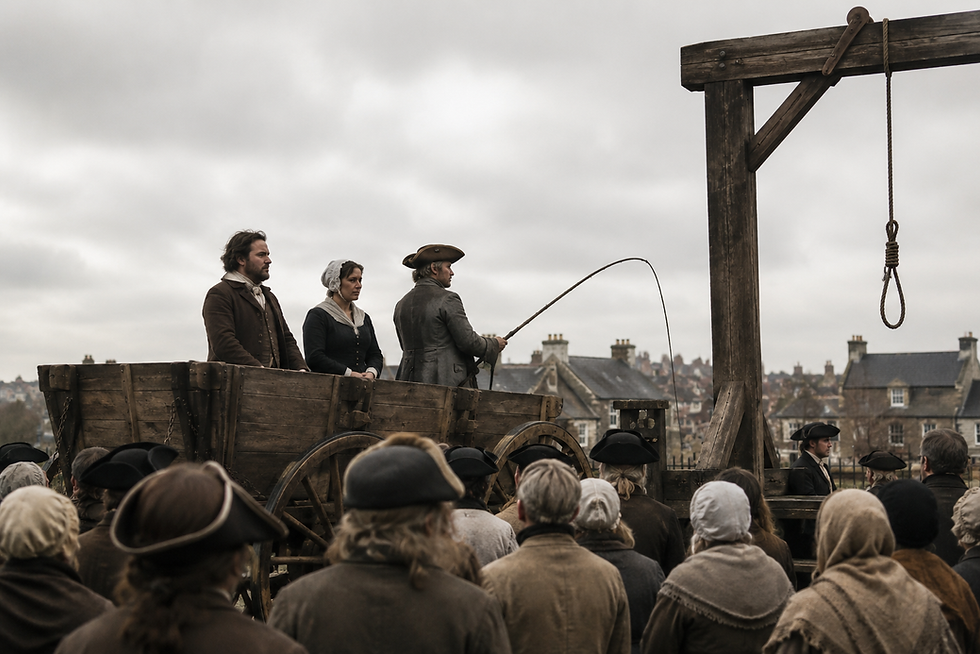
Some parts of history are confronting. They involve violence, inequality, punishment, displacement, and social realities that sit uncomfortably beside modern sensibilities. But removing those elements risks removing the truth of how ordinary people actually lived.
History was not clean.
It was not experienced in neat chapters with clear moral resolutions.
It was lived day by day by people trying to navigate forces they could not control.
History Was Lived
And perhaps that is why these stories still matter.
Because history is not only something we study.
It is something human beings survived.


Comments