




English Constables, Peasants and Clodhoppers

Updated: Jul 27
In the 17th century people living on the fringe of the Celtic fringe were often thought of as being barbarians or savages. If the lower, impoverished sort were in England they would be called clowns or clodhoppers.

Among the lower sort, the question of behaving well and appropriately had become a matter of personal judgment. If most stuck by the rules, others more radical in temperament deliberately broke them.
Eighty Five percent of people living in England at the time were peasants. The word peasant was connected to ignorance, stupidity and firmly associated with labouring classes particularly in the rural labour force. Shakespeare used the word peasant in a detrimental sense 29 times in his plays usually coupled with words such as servant, dull, vulgar, worthless, base, slave, rogue and low.
Throwing down money on the table insisting on paying for the next round was common practice as was belching, urinating against the nearest wall and neglecting to wash the hands afterwards.
If one resided in rural areas and lived by raising cattle or sheep then the people were deemed to be barbarous, uncivil and violent.
Civil behaviour was governed by social hierarchies and the uncivilised and even barbarous English lower sorts were frequently depicted as rude and savage. Violence was also central to their culture and they remained indifferent and often revelled in it.

In church the clergy preached against immoralities and read the statutes prohibiting blasphemy, swearing and cursing, perjury, drunkenness, and profanations of the Lord's Day. It was believed by some that cursing, profane swearing and blaspheming was the greatest threat to England's relationship' with the Almighty.
In the 17th century the responsibility for law and order fell on the community through its constables; though actually only a proportion of the community were eligible for this post. The parish constable was a law enforcement officer. He was expected to monitor trading standards and pubs, catch rats, restrain loose animals, light signal beacons, provide local lodging and transport for the military, perform building control, attend inquests, and collect the parish rates. They were also responsible for collecting national taxes, within their area.
Mostly unpaid and part-time, these men were usually chosen by their parish to attend the magistrate's court where they were sworn in. If the prospective constable didn’t arrive then the people of the parish world be required to pay damages.

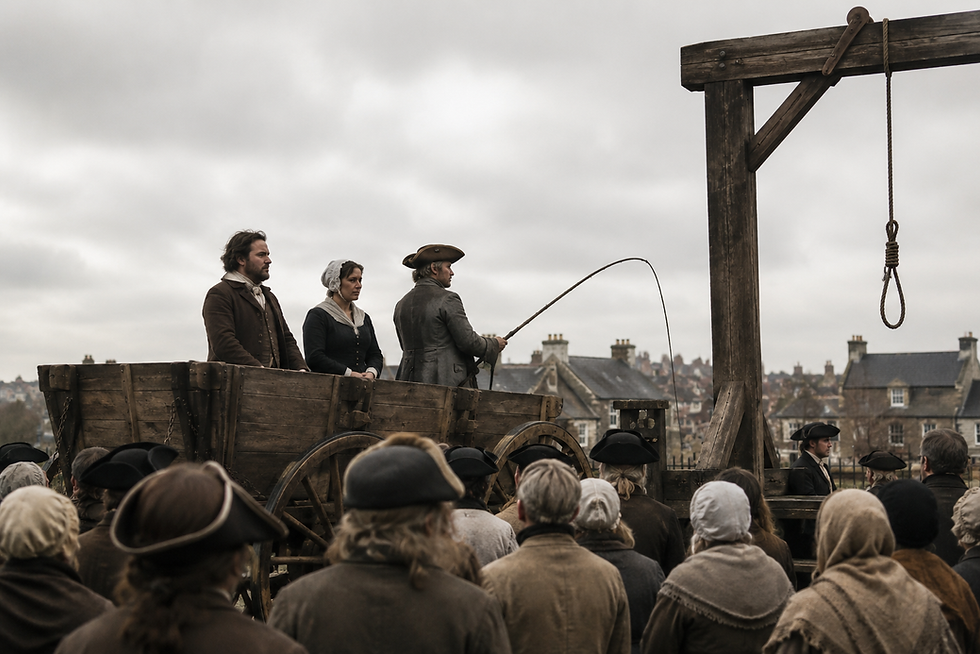
Constables were expected to implement the Vagabonds and Beggars Act 1494, under which vagabonds and beggars were to be set in the stocks for three days, and then whipped. The constable also had general responsibility for the local stocks, as well as for the pillory, and was expected to punish poachers, drunks, hedge-damagers, prostitutes, church-avoiders, and fathers of bastards.
In many cases the constables had criminal records themselves and were often involved in the arrest of others who had committed similar crimes. Most often these men were of the ignorant, meaner sort the Clowns and Clodhoppers.
Constables often used their appointed position to pursue quarrels, settle scores and favour friends. Other times they were ridiculed by villagers who refused to pay taxes.
If a murder or robbery had been committed, or a criminal had escaped, the Constable was responsible for recruiting a search party. The pay for chasing a criminal was anything from one penny to one shilling, depending on the perceived danger. The constable could call upon the villagers or townspeople for help, and anyone who refused to give chase or lend his horse to the party, was fined. The chases were known as Hue and Cry.
The constable was supposed to keep an eye on the moral compass of the neighbourhood. During the Interregnum, with Cromwell in charge, staunch attacks on vice were demanded. Alehouses were restricted, various sports were banned, and the constable’s duties were to enforce all these new rules – an unenviable task.
_________________________________________________________________________
History isn't only about kings and battles. It is also about the ordinary men, women and children whose lives were shaped by the world around them.
If you enjoyed this article, explore more true stories from Tudor and Stuart England, discover the research behind my historical fiction, or follow the free serial, The Thomas Rushworth Chronicles.
Continue exploring here:https://www.paulrushworthbrown.com/stories

About the Author
Paul Rushworth-Brown
Paul Rushworth-Brown is an Australian historical novelist, researcher and creator of The Human Cost of History. Through carefully researched articles and historical fiction, he explores the forgotten lives of ordinary people whose experiences have often been overlooked by history.
His work spans Tudor and Stuart England, colonial Australia and the people who lived through some of history's most turbulent periods. He is also the author of The Thomas Rushworth Chronicles, a free historical serial set in Yorkshire between 1590 and 1603.


Comments