.png)






Uncovering the Past of Historical Trading Companies: What Horrors Lie in the Shadows?

Updated: Jul 27

The age of exploration marked a significant shift in global trade, spotlighting the Horrors of historical trading companies that played crucial roles in this transformation. While these companies sparked economic growth and innovation, a closer look reveals a troubling history of exploitation and injustice. This blog post examines the complex past of trading giants, shedding light on their practices and their lasting effects on societies and cultures worldwide.
The Rise and Horrors of Trading Companies
Trading companies emerged in the late 16th and early 17th centuries, with leading players like the Dutch East India Company (VOC) and the British East India Company (EIC) claiming major footholds in global commerce. The VOC, for instance, became the world's first publicly traded company and was granted monopoly rights by the Dutch government, allowing it to control trade routes in Asia.
These companies facilitated trade and amassed tremendous power, often rivalling European nations. Their actions laid the groundwork for modern capitalism by establishing global trade routes that enabled the exchange of goods from spices to textiles. Yet, behind this façade of success lies a narrative woven with ambition, exploitation, and colonialism.

A startling aspect of historical trading companies is their involvement in colonial exploitation. These corporations aggressively expanded their territories, often through military force, claiming land inhabited by indigenous peoples. Between 1600 and 1800, the British East India Company annexed large portions of India, disregarding local cultures and rights.
For example, the seizure of Bengal in 1757 allowed the EIC to control a major agricultural region, significantly impacting local farmers. The land was repurposed to serve the company’s interests, leading to widespread poverty among the local population. Today, many regions that once fell under the sway of trading companies still struggle with the social and economic fallout from these historical injustices.
The Slave Trade Horrors and Human Rights Abuses

The transatlantic slave trade is a grim chapter in the history of trading companies, with several, including the British and Dutch trading companies, profiting immensely from human trafficking. The British East India Company transported an estimated 3 million enslaved individuals to work on plantations in the Caribbean and the Americas.
With the average price of an enslaved person reaching approximately £100 in today’s economy, these companies established a lucrative business model grounded in human suffering. This egregious exploitation enriched the companies and laid the foundation for systemic inequalities that persist today.
Economic Monopoly and Corporate Power
Historical trading companies were often granted monopolies, allowing them to dominate trade routes and local markets. The British East India Company’s monopoly over Indian trade decimated traditional industries, pushing local weavers and artisans out of business. For instance, the company’s low pricing strategies caused the decline of Indian textiles in the late 18th century, a critical part of the local economy.
This historical example highlights issues today with large corporations wielding immense power over markets. It necessitates contemporary discussions about the implications of monopolistic practices and the importance of nurturing local economies to ensure fairness and competition.
The Role of Corruption and Mismanagement

Corruption ran rampant in historical trading companies, undermining operations and leading to damaging scandals. Many officials engaged in bribery or misused company funds for personal gain. In the 18th century, the EIC faced criticism after reports emerged of abuses of power among its officers, including embezzlement and favoritism.
Mismanagement of resources often resulted in devastating failures. The disastrous famine in India during the mid-19th century, exacerbated by the EIC's exploitative policies, led to the deaths of an estimated 1 million people. Such historical failures serve as potent reminders of the pressing need for responsible corporate governance and ethical practices in today’s business environment.
Cultural Consequences and Legacy
The cultural impacts of historical trading companies reach far beyond trade. They introduced new products and ideas, profoundly transforming societies. While some aspects of this cultural exchange enriched communities, many indigenous practices and languages faced decline as Western values took precedence.
For example, the introduction of Western education and belief systems often overshadowed local traditions, resulting in a loss of cultural heritage. Recognizing this legacy is crucial for fostering cultural awareness and respect for indigenous communities, helping to heal the wounds of the past.
Wrapping Up the Journey
The allure of historical trading companies, often romanticized for their adventurous achievements in global trade, belies a darker history of greed, exploitation, and oppression. By examining their legacy, we unearth vital lessons about ethics, governance, and the responsibilities of corporations today.
This exploration urges us to think critically about history, ensuring that the mistakes of the past inform our present and future. By acknowledging the complexities of this history, we can work towards creating a more equitable and inclusive global narrative, striving to engage respectfully with diverse cultures and economies.
By confronting the darker aspects of historical trading companies, we open up a necessary dialogue about their enduring legacies and how we can pursue justice and respect for all cultures moving forward.
______________________________________________________________________________

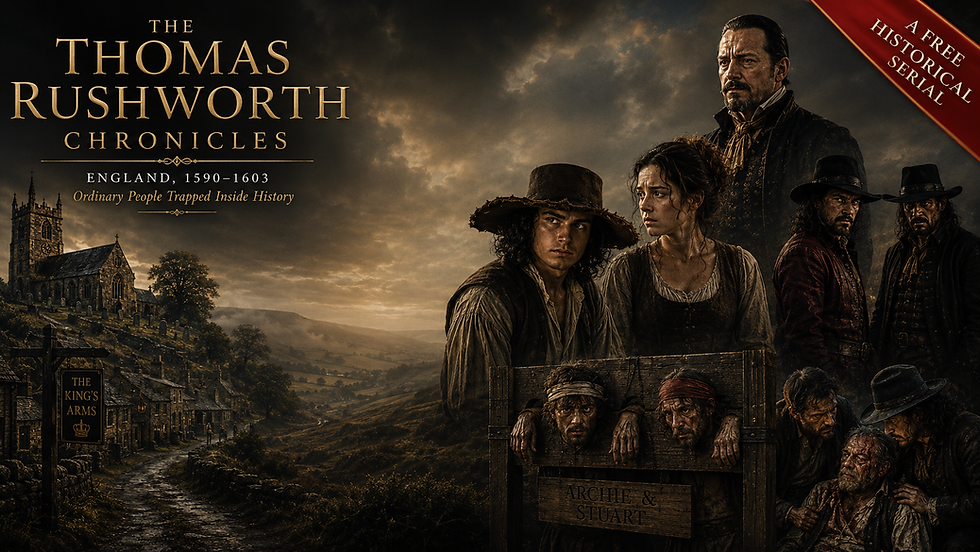
The Thomas Rushworth Chronicles
History remembers the great events. The Thomas Rushworth Chronicles remembers the people who lived through them.
Set in Yorkshire between 1590 and 1603, these free serialized chronicles follow ordinary men and women navigating a world shaped by plague, poverty, manor courts, religious tension, crime, punishment, and survival. Here, history is not a distant backdrop but a force that shapes every decision, every relationship, and every life.
At the centre of the story are the Rushworth family and the villagers around them—labourers, servants, tavern keepers, stewards, merchants, soldiers, widows, outcasts, and those living on society's margins. Some seek opportunity. Some seek justice. Others are simply trying to survive.
Each Chronicle reveals another piece of a larger world filled with hidden motives, dangerous loyalties, village secrets, manor politics, and the everyday struggles of ordinary people trapped inside forces far greater than themselves.
Published as an ongoing serial, The Thomas Rushworth Chronicles invites readers to step into the lives history often ignored and experience the human cost of living through the past.
History continues...

Some lives disappear into history. Others refuse to remain buried.
In the shadow of industrial Yorkshire, two brothers leave the moors behind in search of opportunity, survival, and a future larger than the lives they were born into. But the growing streets of Leeds offer no easy promises. Beneath the smoke, ambition, and expanding wealth lies a world shaped by hardship, silence, class division, and the quiet cost of survival.
As old loyalties fracture and hidden tensions rise, the Rushworth brothers are forced to confront a difficult truth: history is not only shaped by kings and power—but by ordinary people trying to endure the forces closing around them.
The Lost Voices is a richly atmospheric historical novel about identity, endurance, family, and the human cost of history.

He came to Australia with hope. The land had other plans.
In 1950s Australia, a young Yorkshireman arrives under the Big Brother Movement scheme believing hard work and opportunity will give him a better life. Instead, he enters a harsh and unfamiliar world shaped by silence, isolation, power, and histories far older than his own.
Far from the promises he was sold, Jimmy is forced to navigate the brutal realities of outback station life, cultural tension, survival, and the uneasy relationship between belonging and identity. But as he forms unexpected connections with Aboriginal stockmen and begins confronting the truths beneath Australia’s surface, the land itself starts changing him in ways he never expected.
Outback Odyssey is a powerful historical novel about ordinary people caught inside forces far greater than themselves — and the human cost of surviving them.
Find out more: https://www.paulrushworthbrown.com/books

Yorkshire, 1590.On the windswept moors, survival often depends on silence, suspicion, and knowing who to trust before darkness falls.
When rumours begin spreading through the villages and hidden tensions rise beneath the surface of ordinary life, young Thomas Rushworth is drawn into a dangerous world of deception, violence, secret loyalties, and mysteries that refuse to stay buried. Beyond the manor walls and muddy roads lies a brutal existence where peasants struggle to survive against hunger, fear, class division, and the constant threat of ruin.
But in Yorkshire, danger rarely announces itself openly.
Skulduggery is a gritty and atmospheric historical mystery that pulls no punches in its portrayal of life on the Yorkshire moors. Rich in historical realism, suspense, hidden motives, and emotional tension, it immerses readers in a world where every choice carries consequences — and ordinary people are often trapped inside forces far greater than themselves.
Perfect for readers who love historical suspense, medieval intrigue, atmospheric mysteries, and emotionally immersive fiction.
“I intended to read it over the next week but once I started I could NOT put it down.”

England, 1642.Civil war is coming — and ordinary families will pay the price.
As violence spreads across the Yorkshire countryside and neighbour turns against neighbour, the Rushworth family find themselves trapped inside a conflict far greater than they ever imagined. What begins as a struggle for survival soon becomes a dangerous journey through fear, divided loyalties, betrayal, and the brutal realities of a nation tearing itself apart.
Across frozen landscapes, war-torn villages, and uncertain roads, the family must navigate hardship, loss, hidden dangers, and the fragile hope that love and loyalty can survive even in the darkest of times.
But history rarely spares ordinary people.
Red Winter Journey is a richly atmospheric historical adventure filled with suspense, emotional depth, humour, intrigue, romance, and the harsh realities of the English Civil War. Twisting and turning until the very end, it is a story about endurance, family, and the human cost of history itself.
Perfect for readers who love immersive historical fiction, gripping adventure, emotional storytelling, and unforgettable journeys through the past.
“A fictional, historical novel about a loving peasant family caught up in a shocking Civil War. Humour, romance, adventure and excitement are here to enjoy. A great story.”

England, after the execution of King Charles I. The monarchy is gone. Fear rules the roads. And survival belongs to those willing to risk everything.
As Oliver Cromwell’s new Republic tightens its grip across England, the Rushworth family struggle to escape poverty in a country shaped by suspicion, violence, and uncertainty. Along dangerous highways and through shadowed taverns, they encounter highwaymen, thief-takers, pirates, smugglers, and the brutal underworld hidden beneath England’s fragile new order.
But every opportunity comes at a cost.
Drawn into a world of deception, shifting loyalties, hidden motives, and deadly secrets, the family soon discover that survival in this new England demands more than courage alone. Because in a land where power changes hands overnight, trust can become the most dangerous gamble of all.
Dream of Courage is a gripping historical thriller filled with mystery, suspense, danger, adventure, and emotional intensity. Rich in atmosphere and historical realism, it continues the sweeping story of ordinary people trying to endure the forces of history closing around them.
Perfect for readers who love historical suspense, dark adventure, gritty realism, and immersive journeys through England’s turbulent past.

Comments