




Ursula Sontheil, the Yorkshire Witch

Updated: Jun 1


A story of witchcraft, judgment, and the dangerous cost of being an outsider.
Witchcraft and consequential witch hunting were at the time, a fact of life in England and the two thousand legal proceedings between 1560 and 1706 are a testament to that fact. The Puritan doctrine at the time lead by the ‘Protector of England’, Oliver Cromwell called for an end to unholy ways. Consequently, those found to be stepping outside those prescribed ways, such as those women who had children out of wedlock, could be labelled as a witch.
After the English Civil War, parliamentary backed Puritanism was coming to the forefront and huge political and religious divides occurred encouraging suspicion and tension in villages and towns throughout Yorkshire. The witch panic was a continuing result of this and grew widespread in England at the time. Some said that this was the churches and local ministers’ way of getting the masses back to prayer. Others at the time, suggested witchcraft was the Devil’s way of building an army for the end of the world.
What we do know of Ursula was passed from word of mouth as most at the time would have been illiterate. There were stories of unseen forces, floating and other fanciful tales, but she was more known for her prophesies and soothsaying.
It was reputed that Ursula was born out of wedlock, her fifteen-year-old mother shunned and banished from their village was forced to take up refuge in a cave. Born with a crooked nose, her back bent over and legs twisted Ursula was forced to walk with a stick. Later placed with a family in a nearby village when her mother was forced into a convent, she was able to go to school. Unfortunately, she was teased and taunted by children who would claim losing hair and tripping over when she approached. As a result, she was forced to leave and took up residence in the cave where she was born.
Amelia Sceats from the University of Huddersfield, in her article described Yorkshire at the time as having ‘a greater propensity to believe in the existence of covens of witches’ In fact, a man by the name of Edward Fairfax from the same town in which Ursula lived, accused two women of witchcraft to be responsible for the death of his daughter. The two women were jailed but later released after a petition was sent to the magistrate claiming their innocence.
Ursula lived a lonely life telling prophecies and ducking accusations of witchcraft such as the claim by Cardinal Wolsey that she was a witch and would be burned at the stake.
Ursula died in 1561 at the age of 73. The church refused to bury her therefore she was buried in an unmarked grave somewhere in Knaresborough, Yorkshire.
Throughout history most of the claims of witchcraft have been against women, especially women with too many children, women with too few children women who were different. Being too rich, too poor, and too female would have made life very precarious in 16th Century Yorkshire.

The first Chronicle is now live — free to enter on the website.
Step into a world of tavern rumours, hidden violence, unresolved mysteries, and ordinary people trapped inside history.
A new Chronicle will be released each week.
The story is only just beginning.
The Thomas Rushworth Chronicles:

Paul Rushworth-Brown is the author of five novels:
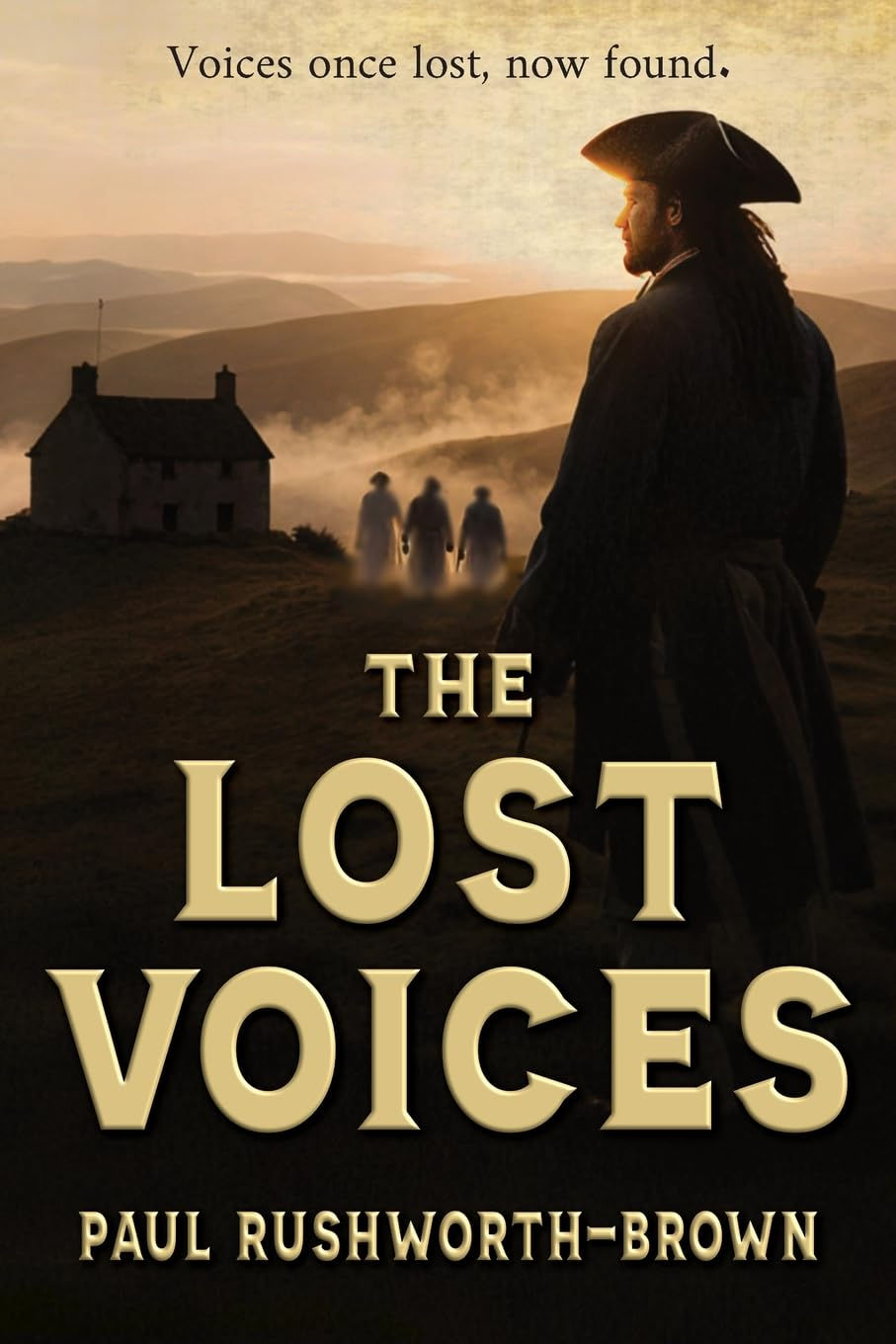
What happens when survival matters more than morality?
The Lost Voices plunges readers into the dangerous underworld of 17th century England, where brothers John and Robert Rushworth abandon the barren moors in search of fortune, only to find themselves trapped in a brutal world of theft, betrayal, murder, and deception.
From the shadowed streets of Leeds and York to the docks of Hull, beggars, pirates, tavern keepers, cutpurses, and highwaymen collide in a story where every decision carries deadly consequences. As Robert Rushworth is drawn deeper into crime and treachery, the question becomes unavoidable: can redemption still exist in a world built on survival?
Rich in historical atmosphere and filled with suspense, The Lost Voices is a gripping journey through the forgotten lives history left behind — where secrets whisper through taverns, justice hangs by a thread, and not everyone escapes the past alive.

He came to Australia chasing opportunity. The land had other plans.
Set in the harsh and unforgiving Australian outback of the 1950s, Outback Odyssey follows Jimmy, a young English migrant searching for purpose, survival, and belonging in a country far larger and more dangerous than he ever imagined.
Far from the promises he was sold, Jimmy is thrust into a world shaped by isolation, brutal landscapes, unspoken rules, and the quiet tensions simmering beneath station life. As drought, hardship, and buried truths begin closing in, he discovers that survival in the outback demands far more than strength alone.
Alongside those whose lives have long been shaped by the land — including Aboriginal stockmen carrying knowledge and histories rarely acknowledged — Jimmy is forced to confront the reality of a country that changes everyone who enters it.
Outback Odyssey is a powerful historical novel about endurance, identity, survival, and the human cost of chasing a new beginning.

Skulduggery- An exciting, mysterious, fictional and historically accurate adventure pulls no punches about the life and hardships of peasant farmers living on the moors of Yorkshire in 1590.
"Was excellent reading . I intended to read it over the next week but once I started I could NOT put it down . Really enjoyed it !"

Red Winter Journey- Come on this historic journey, which twists, turns and surprises until the very end. If you like history, adventure and intrigue with a dash of spirited love, then you will be engrossed by this tale of a peasant family unexpectedly getting caught up in the ravages of the English Civil War in 1642.
"A fictional, historical novel about a loving peasant family caught up in a 1642 shocking Civil War. Humour, romance, adventure and excitement are here to enjoy. A great story.

Dream of Courage- Released!
The much anticipated story of the Rushworth family and their journey out of poverty.
King Charles has been executed and England becomes a Republic under the leadership of Oliver Cromwell. Highwaymen, thief-takers, pirates and broggers tell
the story in this mysterious and bone chilling historical thriller.
Continue Exploring the Human Cost of History
Some stories challenge the way nations remember themselves.

Others force us to confront the voices history tried to leave outside the room.
Watch more long-form author conversations exploring history, memory, power, and the lives often overlooked by official narratives.


Comments