Paul Rushworth-Brown | Australian Historical Novelist, Historian & Educator
Australian historical novelist • Historian • Interviewer • Educator
Paul Rushworth-Brown is an Australian historical novelist, historian, interviewer, and educator whose work explores the human cost of history through award-winning novels, historical research, international interviews, and free educational resources.
Creator of The Human Cost of History, Paul brings the past to life through stories of ordinary people facing extraordinary moments.
Featured on international television, radio, podcasts, and literary media across Australia, the United States, and the
United Kingdom


Read the free serialized historical mystery
Explore Paul's Historical Fiction



1.png)
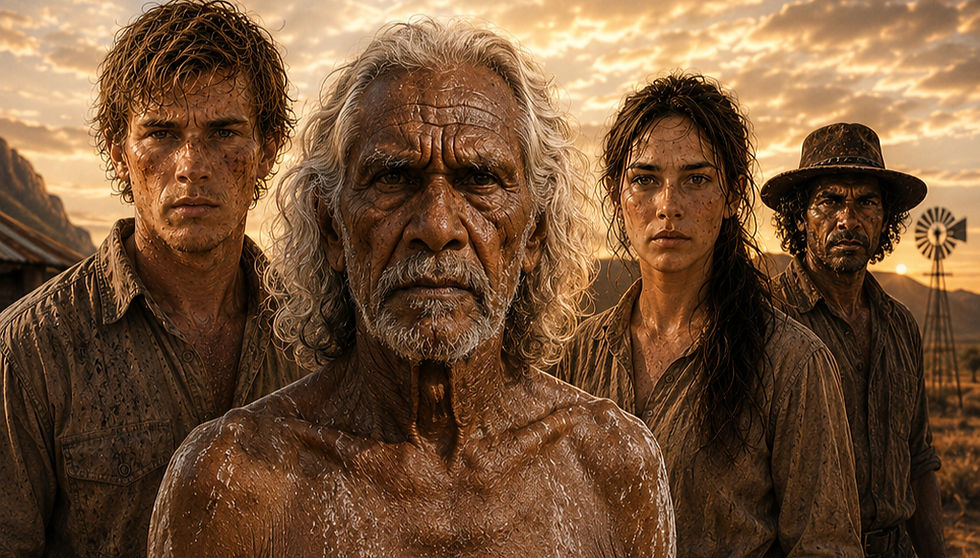
He came to Australia for a new life—he wasn’t prepared for what it would cost.
Isolation. Survival. The quiet weight of starting again.
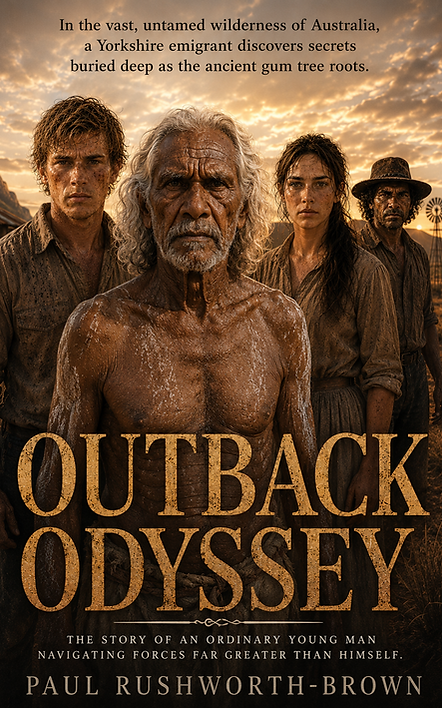
An ordinary young man navigating forces far greater than himself.
This is Outback Odyssey.

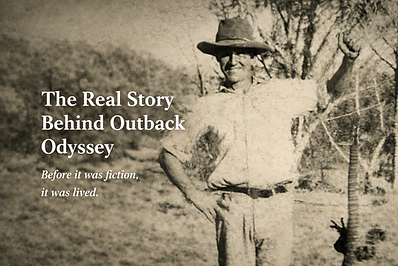







What Readers Are Saying
"An unforgettable journey across continents, generations, and the rugged landscapes of both history and the human spirit."
"Rushworth-Brown's storytelling is vivid, immersive, and emotionally resonant."
"Outback Odyssey is a powerful and evocative work of historical fiction that lingers long after the final page."
— Marianne Pestana, US Reviewer & Radio Host
★★★★★ Amazon Review
Marianne Pestana praised Outback Odyssey for its rich historical detail, emotional depth, and powerful exploration of resilience, identity, and belonging as migrants forge new lives in post-war Australia.
.png)

In this moment from Outback Odyssey, Jimmy encounters the land not as something to be understood—but something to be felt, and perhaps never fully known. The land is not just a backdrop to the story—it is a character in its own right.
An extract from Outback Odyssey

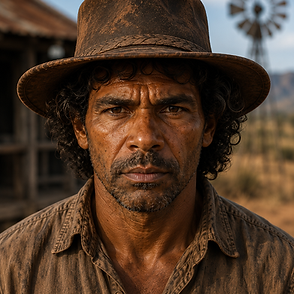




The billabong didn’t move.
It lay beneath the afternoon light, flat and unbroken—like something that had decided long ago not to give anything away.
Jimmy slowed as he approached it.
The air felt different here. Not quieter—just… held. As if the place itself was aware of them.
Amanda stood near the edge.
She hadn’t said much on the walk out. Just enough to show she knew the way. Nothing more. Now she stood still, looking across the water as if she’d been there longer than he had.
Jimmy stopped a few steps behind her.
He glanced at the trees. Dry branches, uneven shadows. The ground underfoot shifting between dust and something softer, uncertain. Nothing about it settled.
“You come here often?” he asked.
Amanda didn’t turn.
“Sometimes.”
Her voice was low, but it carried without effort.
Jimmy stepped up beside her and looked out.
The water didn’t move.
Back home, water meant sound—flow, current, something alive. This felt different. Like it had been left behind.
“What is it?” he asked.
“A billabong.”
He nodded, though it didn’t help much.
He waited.
“It used to be part of the river,” she said after a moment. “Before it changed.”
Jimmy frowned slightly. “Changed?”
She didn’t elaborate. Just kept looking out across it.
The silence stretched—not empty, but closed.
Jimmy crouched, picking up a small stone. He turned it once in his hand, then tossed it lightly into the water.
The ripple spread outward in a slow circle.
Amanda watched it.
“You shouldn’t do that,” she said.
Jimmy straightened. “Why not?”
A pause.
Then, quietly—
“It remembers.”
He almost laughed—but didn’t.
There was nothing in her voice to suggest she was joking.
He looked back at the water.
The surface had already stilled again, as if the ripple had never happened.
“You really believe that?” he asked.
Amanda turned then.
Not quickly. Not sharply. Just enough to meet his eyes.
“It doesn’t matter what I believe.”
Jimmy held her gaze, uncertain.
There was something in the way she said it—not dismissive, not defensive. Just… final.
A breeze moved across the surface of the billabong. Barely there. The kind of movement you could miss if you weren’t paying attention.
Jimmy realised then—
he didn’t understand this place.
Not the land.
Not the silence.
Not the way things were said without being explained.
Back home, things had names that meant something. Here, everything felt partial. Like he’d arrived in the middle of something that had started long before him—and wasn’t interested in catching him up.
Amanda stepped back.
“We should go.”
Jimmy nodded, but stayed a moment longer.
He looked at the water again.
Still. Closed. Unchanged.
Then he turned and followed her.
But something stayed with him as they walked.
Not what she’d said—
but the feeling that there was more behind it.
And for the first time since arriving,
Jimmy wondered if some things here were never meant to be explained.


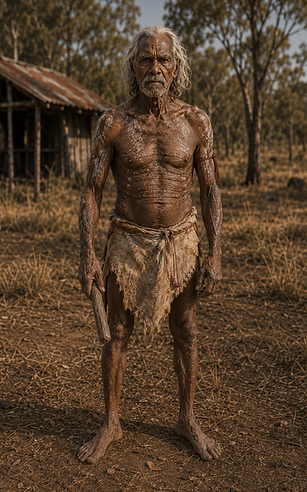

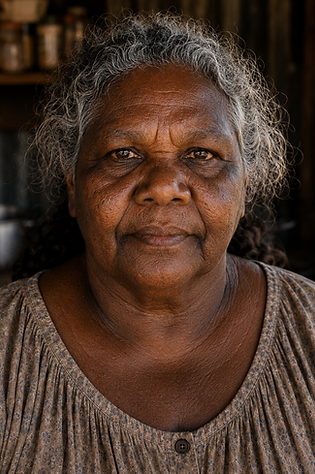


The land, the people, and the choices ahead begin to reshape him in ways he doesn’t yet understand.
Jimmy Brown crossed half the world believing Australia would offer him a fresh start.
Instead, he found himself in a land that demanded something far greater than hard work or courage. It demanded respect.
When Dhirrari invites Jimmy to meet the Elders, he discovers that belonging cannot be claimed. It must be earned.
Jimmy sought refuge in his work, burying himself in the station's hard labour, but the companionship of Dhirrari gave him something to cling to. Dhirrari was a man carved from the earth and wind, a figure of quiet strength whose words carried weight not because they were loud, but because they were true.
Under Dhirrari's quiet guidance, Jimmy found himself drawn deeper into Country. The gathering with the Elders lay ahead, and despite everything he had faced since arriving in Australia, this was different.
"Jimmy," Dhirrari said quietly, "tomorrow you'll come with me. The Elders are ready to meet you."
Jimmy had hoped for this moment, but now that it had arrived, it felt far greater than he had imagined.
"I'll be ready," he replied, though beneath the words a tide of doubt stirred within him.
Dhirrari studied him for a moment.
"They won't judge you by your words," he said. "They'll know who you are by your actions. If you hide anything, they'll see it."
Jimmy drew a slow breath.
He had come to this Land as an outsider.
Now he stood before a path few were ever invited to walk.
Ahead lay no ordinary destination.
The Gathering Place waited.


If this story resonates with you, take the next step.