.png)






Public Executions in England: How a Hanging Became Entertainment


A Society Built on Fear
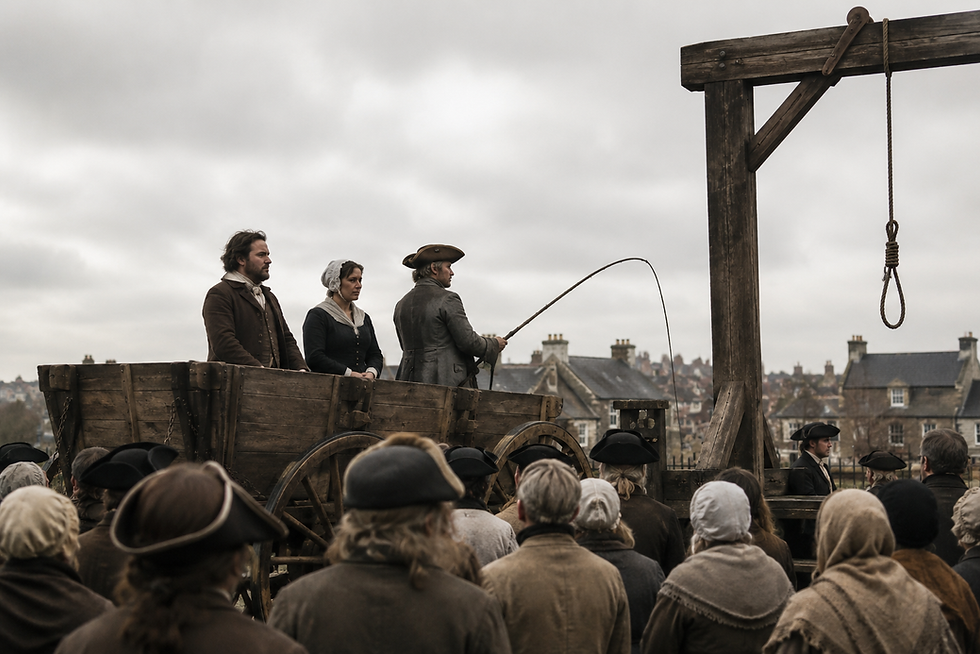
Public executions in England were once among the largest public gatherings of their time. Long before television, crowds travelled for miles to witness criminals face the gallows, turning punishment into a form of entertainment.
In 17th Century Yorkshire, there were over two hundred capital offences that could lead to the death sentence, many of them no more than petty theft. The popularity of using the noose to dispense with those who engaged in these crimes was at its peak.
If an adult was found stealing goods worth more than thirteen and a half shillings (£70 or a week’s wages), then there was a good possibility that they would end up visiting the gallows at Tyburn in York. A child aged between 7-14 with strong evidence of wrongdoing could also be subject to such a penalty depending on the decision of the magistrate at the Court of Assizes.
Public Executions in England: How a Hanging Became Entertainment
The Tyburn site was used by the Crown's justice, administered at York Castle. Its gallows consisted of a wooden triangle standing on three wooden pillars - known as the 'Three-Legged Mare'. The location was the scene of executions for more than 400 years and today is now marked by a plaque at the site.
Execution day was a big, rowdy event - criminals were a spectacle as they were driven from York Castle Prison to the gallows, sitting on top of their coffins with the noose around their necks. Special newspapers were printed to inform spectators of the names and crimes of those to be hanged and usually a large crowd would attend which would block the road leading to York. From 1830 until 1862 executions were conducted on a Saturday to allow more people to attend. Finally, the gallows were moved to York Castle itself to free up one of the major roads into the city.
From Highwayman to Condemned Man

This cramped stone cell is believed to be where the infamous highwayman Dick Turpin spent his final days before execution in York in 1739. Far removed from the romantic image later created by novels and folklore, Turpin shared this small space with two other prisoners, enduring the cold, darkness, and uncertainty that accompanied imprisonment in 18th-century England. The reality was far less glamorous than the legend. Behind the stories of daring robberies and midnight rides was a condemned man waiting for the gallows, confined within walls smaller than a modern room and facing the same fear and isolation experienced by countless forgotten prisoners of the period.
Continue the Journey: See the First Ever Likeness of Dick Turpin

Dick Turpin's capture was not the dramatic horseback chase later imagined by popular folklore. By the late 1730s, the infamous highwayman was living under the false name of John Palmer in Yorkshire. His downfall came not through a daring confrontation but through suspicion and a simple act of pride. After shooting a neighbour's rooster, Turpin drew unwanted attention to himself. Local authorities began asking questions, and his true identity slowly emerged.
Arrested and imprisoned in York Castle, Turpin found himself confined to a small stone cell shared with two other prisoners. The man celebrated in ballads as a fearless outlaw now faced the same harsh reality as countless ordinary criminals awaiting trial and execution.
On 7 April 1739, Dick Turpin was led to the gallows at York. Contemporary accounts suggest he arrived dressed in fine clothes, reportedly purchasing a new frock coat and shoes for the occasion. Thousands gathered to witness the event. Public executions in 18th-century England were major spectacles, drawing crowds eager to see justice carried out before their eyes.

History would later transform Turpin into a romantic folk hero, famous for adventures that were largely invented long after his death. The reality was far less glamorous. His final journey ended not on the open road but on the scaffold, where a condemned man stood before a crowd and met the same fate as many others whose names have since been forgotten.
Turpin's story continues to echo through Yorkshire's history and folklore, which is one reason it appears in my novel The Lost Voices. The novel explores lives often overlooked by official history and the stories that continue to haunt the landscapes where they unfolded. Long after the crowd dispersed from the execution ground, the memory of Turpin's fate remained woven into the county's collective memory, becoming part of the larger story of Yorkshire itself.
The Evolution of the Noose
In 1861 the Criminal Law Consolidation Act was passed by Parliament reducing the number of crimes for which the gallows could be used. These included arson in a royal dockyard, treason, piracy and murder.
Prior to this, hanging was carried out using the short drop method where death occurred by strangulation and not by the snapping of the neck as is believed. The law stated that the person found guilty should be hanged by the neck ‘until dead’ but often this was not an instantaneous ending. Hanging by strangulation is not immediate and in some cases the victim could be twitching and kicking for two or three minutes, sometimes longer.
In the early 1800’s the method of hanging came under scrutiny and it was believed that the ‘long drop method’ was a more humane way of carrying out the act. Rather than a long period of suffering, it was hoped that the long drop method would cause instantaneous snapping of the vertebrae in the neck, but at times this came with its own set of problems. Such as the one hour and eleven minutes it took for Canadian Antonio Sprecage to die in 1919 or the hanging of a man by the name of Goodale whose head was ripped completely from his body.
In 1885 John Lee was sentenced to hang and the attempt failed three times due to rain causing the planks in the trap door to swell and not open. John Lee’s execution was stalled and he ended up living a long life.

In Britain, it wasn’t until 1965 that hanging was suspended as the death penalty and a further four years before it was finally abolished; however, even after this hanging could still be used for treason, piracy with violence, arson in a royal dockyard and certain crimes under the jurisdiction of the armed forces. Finally, in 1999 all forms of the death penalty were no longer used in Britain after the ratification of the 6th protocol of the European Convention on Human Rights
Enter the Chronicles- CLICK!

Continue Exploring the Human Cost of History
Some stories challenge the way nations remember themselves.

Others force us to confront the voices history tried to leave outside the room.
Watch more long-form author conversations exploring history, memory, power, and the lives often overlooked by official narratives.


Paul Rushworth-Brown is the author of five novels:
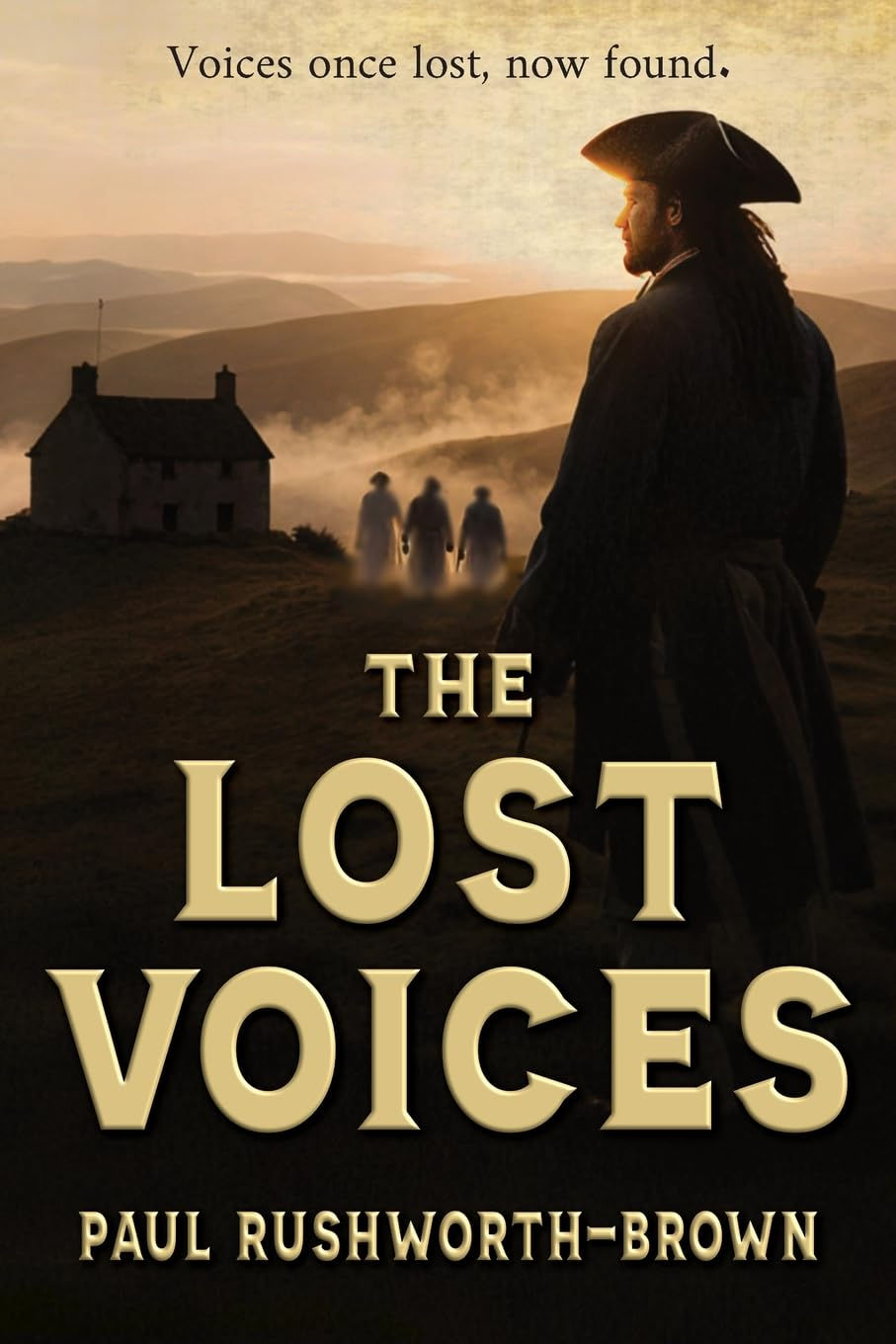
Some lives disappear into history. Others refuse to remain buried.
In the shadow of industrial Yorkshire, two brothers leave the moors behind in search of opportunity, survival, and a future larger than the lives they were born into. But the growing streets of Leeds offer no easy promises. Beneath the smoke, ambition, and expanding wealth lies a world shaped by hardship, silence, class division, and the quiet cost of survival.
As old loyalties fracture and hidden tensions rise, the Rushworth brothers are forced to confront a difficult truth: history is not only shaped by kings and power—but by ordinary people trying to endure the forces closing around them.
The Lost Voices is a richly atmospheric historical novel about identity, endurance, family, and the human cost of history.
Find out more: https://www.paulrushworthbrown.com/books

He came to Australia with hope. The land had other plans.
In 1950s Australia, a young Yorkshireman arrives under the Big Brother Movement scheme believing hard work and opportunity will give him a better life. Instead, he enters a harsh and unfamiliar world shaped by silence, isolation, power, and histories far older than his own.
Far from the promises he was sold, Jimmy is forced to navigate the brutal realities of outback station life, cultural tension, survival, and the uneasy relationship between belonging and identity. But as he forms unexpected connections with Aboriginal stockmen and begins confronting the truths beneath Australia’s surface, the land itself starts changing him in ways he never expected.
Outback Odyssey is a powerful historical novel about ordinary people caught inside forces far greater than themselves — and the human cost of surviving them.
Find out more: https://www.paulrushworthbrown.com/books

Yorkshire, 1590.On the windswept moors, survival often depends on silence, suspicion, and knowing who to trust before darkness falls.
When rumours begin spreading through the villages and hidden tensions rise beneath the surface of ordinary life, young Thomas Rushworth is drawn into a dangerous world of deception, violence, secret loyalties, and mysteries that refuse to stay buried. Beyond the manor walls and muddy roads lies a brutal existence where peasants struggle to survive against hunger, fear, class division, and the constant threat of ruin.
But in Yorkshire, danger rarely announces itself openly.
Skulduggery is a gritty and atmospheric historical mystery that pulls no punches in its portrayal of life on the Yorkshire moors. Rich in historical realism, suspense, hidden motives, and emotional tension, it immerses readers in a world where every choice carries consequences — and ordinary people are often trapped inside forces far greater than themselves.
Perfect for readers who love historical suspense, medieval intrigue, atmospheric mysteries, and emotionally immersive fiction.
“I intended to read it over the next week but once I started I could NOT put it down.”

England, 1642.Civil war is coming — and ordinary families will pay the price.
As violence spreads across the Yorkshire countryside and neighbour turns against neighbour, the Rushworth family find themselves trapped inside a conflict far greater than they ever imagined. What begins as a struggle for survival soon becomes a dangerous journey through fear, divided loyalties, betrayal, and the brutal realities of a nation tearing itself apart.
Across frozen landscapes, war-torn villages, and uncertain roads, the family must navigate hardship, loss, hidden dangers, and the fragile hope that love and loyalty can survive even in the darkest of times.
But history rarely spares ordinary people.
Red Winter Journey is a richly atmospheric historical adventure filled with suspense, emotional depth, humour, intrigue, romance, and the harsh realities of the English Civil War. Twisting and turning until the very end, it is a story about endurance, family, and the human cost of history itself.
Perfect for readers who love immersive historical fiction, gripping adventure, emotional storytelling, and unforgettable journeys through the past.
“A fictional, historical novel about a loving peasant family caught up in a shocking Civil War. Humour, romance, adventure and excitement are here to enjoy. A great story.”

England, after the execution of King Charles I.The monarchy is gone. Fear rules the roads. And survival belongs to those willing to risk everything.
As Oliver Cromwell’s new Republic tightens its grip across England, the Rushworth family struggle to escape poverty in a country shaped by suspicion, violence, and uncertainty. Along dangerous highways and through shadowed taverns, they encounter highwaymen, thief-takers, pirates, smugglers, and the brutal underworld hidden beneath England’s fragile new order.
But every opportunity comes at a cost.
Drawn into a world of deception, shifting loyalties, hidden motives, and deadly secrets, the family soon discover that survival in this new England demands more than courage alone. Because in a land where power changes hands overnight, trust can become the most dangerous gamble of all.
Dream of Courage is a gripping historical thriller filled with mystery, suspense, danger, adventure, and emotional intensity. Rich in atmosphere and historical realism, it continues the sweeping story of ordinary people trying to endure the forces of history closing around them.
Perfect for readers who love historical suspense, dark adventure, gritty realism, and immersive journeys through England’s turbulent past.


Comments