





To Hell, Hull or Halifax-The Halifax Gibbet was an early Guillotine

Updated: Jul 25

The Halifax Gibbet was an early Guillotine
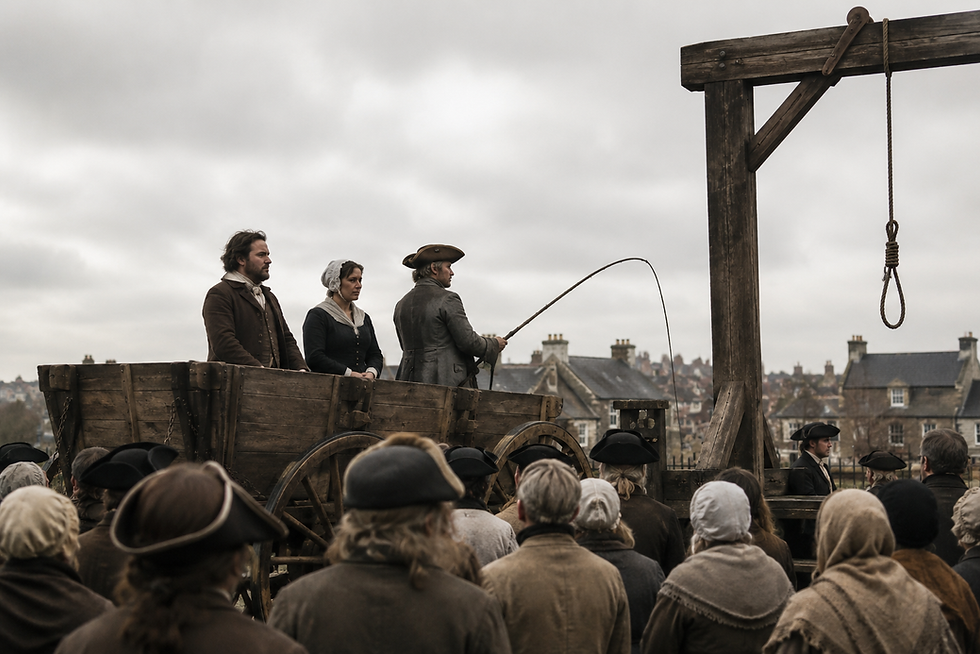
The Halifax Gibbet was an early guillotine used in the town of Halifax West Yorkshire years before it was used in France. During the 16th century, it was used as an alternative to beheading by axe or sword. Halifax was once part of the Manor of Wakefield, where ancient custom and law gave the Lord of the Manor the authority to execute summarily by decapitation any thief caught with stolen goods to the value of 13½ shillings, a petty crime, or who confessed to having stolen goods of at least that value.

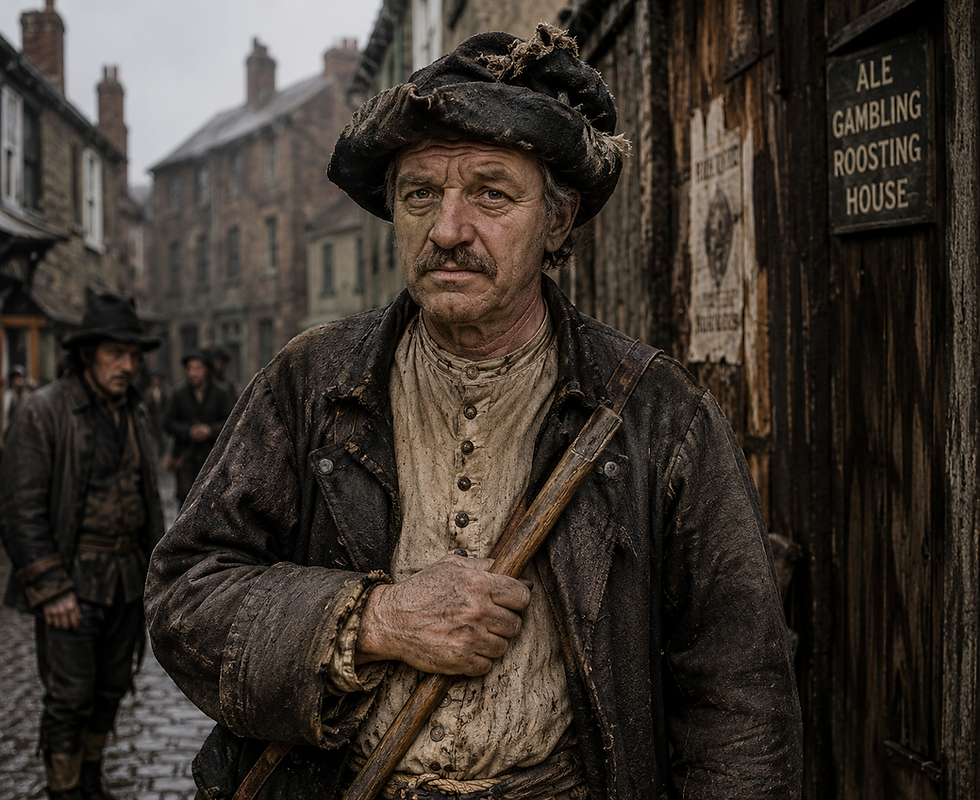
Decapitation was a fairly common method of execution in England, but Halifax was unusual in two respects: it employed a guillotine-like machine that appears to have been unique in the country, and it continued to decapitate petty criminals until the mid-17th century, the setting for my next novel 'Dream of Courage'.
The device consisted of an axe head fitted to the base of a heavy wooden block that ran in grooves between two 15-foot (4.6 m) tall uprights, mounted on a stone base about 4 feet (1.2 m) high. A rope attached to the block ran over a pulley, allowing it to be raised, after which the rope was secured by attaching it to a pin in the base. The block carrying the axe was then released either by withdrawing the pin by the animal that was stolen or by the owner of the stolen goods.
Folklore tells the tale that if the perpetrator managed to move his head and escape to the other side of the river before the executioner could catch him, then he was set free.

The Halifax Gibbet remains one of England's most remarkable surviving instruments of justice. Long before the French Revolution made the guillotine infamous, the people of Halifax had already developed a machine capable of carrying out swift public executions for what today would be considered relatively minor thefts. It stands as a powerful reminder of how differently crime, punishment and justice were understood in early modern England—and why the lives of ordinary men and women are often the most compelling stories history has to tell.
________________________________________________________________________________
History isn't only about kings and battles. It is also about the ordinary men, women and children whose lives were shaped by the world around them.
If you enjoyed this article, explore more true stories from Tudor and Stuart England, discover the research behind my historical fiction, or follow the free serial, The Thomas Rushworth Chronicles.
Continue exploring here:https://www.paulrushworthbrown.com/stories

About the Author
Paul Rushworth-Brown is an Australian historical novelist, researcher and creator of The Human Cost of History. Through carefully researched articles and historical fiction, he explores the forgotten lives of ordinary people whose experiences have often been overlooked by history.
His work spans Tudor and Stuart England, colonial Australia and the people who lived through some of history's most turbulent periods. He is also the author of The Thomas Rushworth Chronicles, a free historical serial set in Yorkshire between 1590 and 1603.

Comments