





The Yorkshire Thief-taker-Criminal or Cop?

Updated: Jul 27
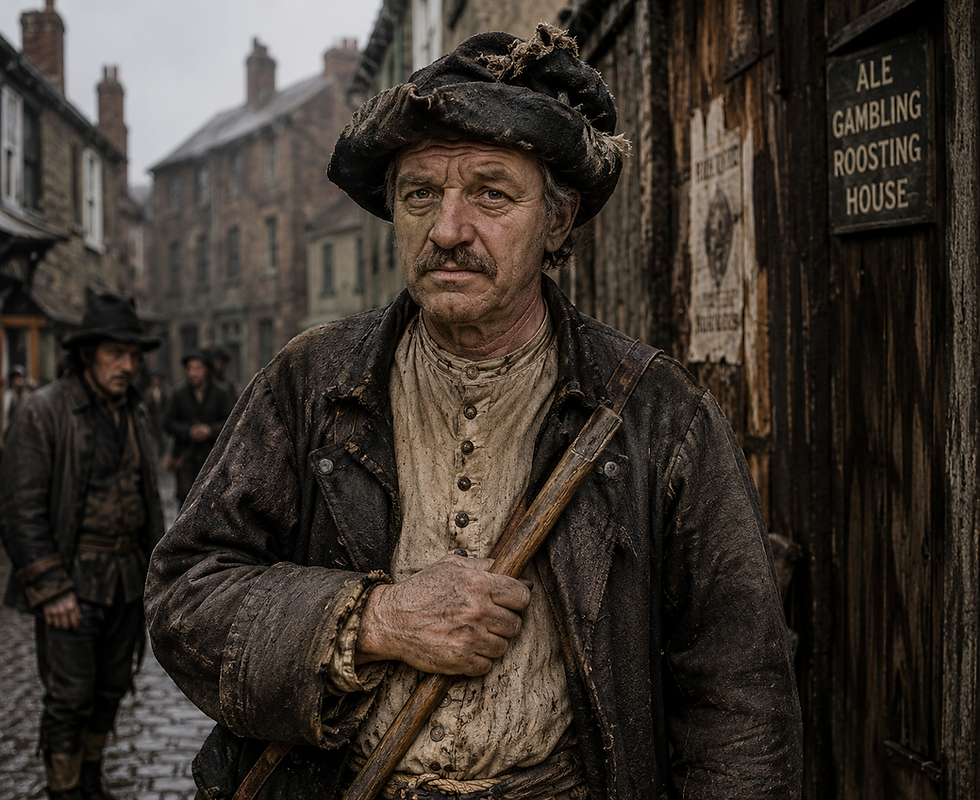
With the increase of import and export out of Hull and Leeds and the immigration of the rural poor to urban centres, there were more opportunities for crime especially among those that scorned the new trading bourgeoisie that came to power after the English Civil War. In Leeds, the rich trading families lived right next door to the hovels and the crudely built shacks of the poor. More importantly, with the increased trade came the ability of those that had the money to purchase more consumer goods including scarves, linen, jewellery, silks, and metal ornaments.
As Leeds and Hull became the headquarters for trade to Europe and the Baltic, tradesmen, clothiers, and skilled professionals all who had an increased wealth, carried valuables and increasing amounts of readily available cash. The economy of the middle class started to grow, and Leeds and Hull became places of grandiose buildings, gardens, theatres, and gambling resorts. Populations increased as the number of poor were forced to sell their labour and there were others that survived by crime. All of this justified by a growing social unrest and a supposedly honest world of increasing material wealth.
The Thief-Taker
The availability of money and valuables grew, and the size, density and vagabond population provided ample prospects for earning a dishonest living. Leeds and Hull were made up of a network of narrow streets and partly cobbled lanes. There was a criminal underground with thieves and fences who provided shelter and economic assistance in return for stolen goods. The fence provided advice, tips, targets, and crime techniques but most importantly alibis and false bills of sale for stolen goods.

The justice system was full of corrupt magistrates, prison keepers, legal officials and arrangers that bribed officials and swearers to perjure in the court of law. Lack of a regulated police force gave rise to the independent officer or thief-taker. Most were recruited from the criminal underground and provided with powers of a general warrant which allowed them to arrest and detain on grounds of suspected crime.
Having come from the criminal structures that existed, most could easily move among the criminal world undetected. They employed spies to find out who had committed crimes and what goods they had acquired. They were also employed by prison keepers to arrest criminals and reap the benefits of blackmail and extortion. Often thief-takers would inform thieves of targets then arrest them returning the stolen goods to their owners for a fee.
__________________________________________________________________________________
History isn't only about kings and battles. It is also about the ordinary men, women and children whose lives were shaped by the world around them.
If you enjoyed this article, explore more true stories from Tudor and Stuart England, discover the research behind my historical fiction, or follow the free serial, The Thomas Rushworth Chronicles.
Continue exploring here:https://www.paulrushworthbrown.com/stories

Paul Rushworth-Brown is an Australian historical novelist, researcher and creator of The Human Cost of History. Through carefully researched articles and historical fiction, he explores the forgotten lives of ordinary people whose experiences have often been overlooked by history.
His work spans Tudor and Stuart England, colonial Australia and the people who lived through some of history's most turbulent periods. He is also the author of The Thomas Rushworth Chronicles, a free historical serial set in Yorkshire between 1590 and 1603.


Comments