





The Gong Farmer: What Archaeologists Found in Medieval Cesspits Shocked Them


The Origin of the Gong Farmer
Long before modern sewer systems, gong farmers performed one of the most dangerous and unpleasant jobs in England. Working by lantern light beneath houses and inns, they removed the waste that kept towns functioning. What they left behind would one day reveal extraordinary—and sometimes disturbing—secrets about everyday life in the past
The word ‘gong’ is derived from the old English, gang, which means ‘to go’ and seems to have been used to describe a privy or latrine since as early as the 11th century.
How the medieval gong farmer unknowingly preserved some of the most revealing secrets of everyday life in England.
The ‘gong farmer’ was a someone who dug out and removed human excrement from privies and cesspits in 14th to 17th century England. Gong farmers were only allowed to work between 9pm and 5am as members of the public did not want to see them at work digging and collecting the ‘night soil’.
Night soil is a historically used euphemism for human excreta collected from cesspools, privies, pail closets, pit latrines, privy middens, septic tanks, etc. This material was removed from the immediate area and often transported out of towns and sold on as a fertilizer.
Another definition is "untreated excreta transported without water (e.g. via containers or buckets)".The modern term is fecal sludge.
Life Before Modern Sewers
Cesspits were made from brick chambers about six feet deep and four feet wide. They were placed as far away from the house as possible, but sometimes they are installed in the basement and were often placed under cellar floors or in the yard of a house. Some had wooden chutes to carry excrement from the upper floors to the cesspit, sometimes flushed by rainwater. Cesspits were not watertight, allowing the liquid waste to drain away and leaving only the solids to be collected. After being dug out, the solid waste was removed in large barrels, which were loaded onto a horse-drawn cart.

A foul odour from cesspits was a continual problem, and the accumulation of solid waste meant that they had to be cleaned out every two years or so. In the late 15th century, they charged two shillings per ton of waste removed. The working life of a gong farmer was spent up to his knees, waist, even neck in human excrement. It was also an extremely dangerous job, as gong farmers often dug into pockets of deadly poisonous gas and of course risked disease. Sometimes the gong farmer would be overcome by asphyxiation from the noxious fumes produced by the human excrement.
The Men Who Worked While England Slept
A gang of four men (exclusive of those who have the care of the horses, and who drive the night-carts to and from the scenes of the men’s labours at the cesspools) are set to work. The labour of the gang is divided, though not with any individual or especial strictness, as follows: The holeman, who goes into the cesspool and fills the tub, the ropeman, who raises the tub when filled and the tub men (of whom there are two), who carry away the tub when raised, and empty it into the cart.
From this we can see that much of the work was done from a surface level, and though lanterns were used, it was not necessary to enter the dangerous areas with the lanterns due to the build-up of methane gas. The lanterns were placed nearby or suspended over the work area.
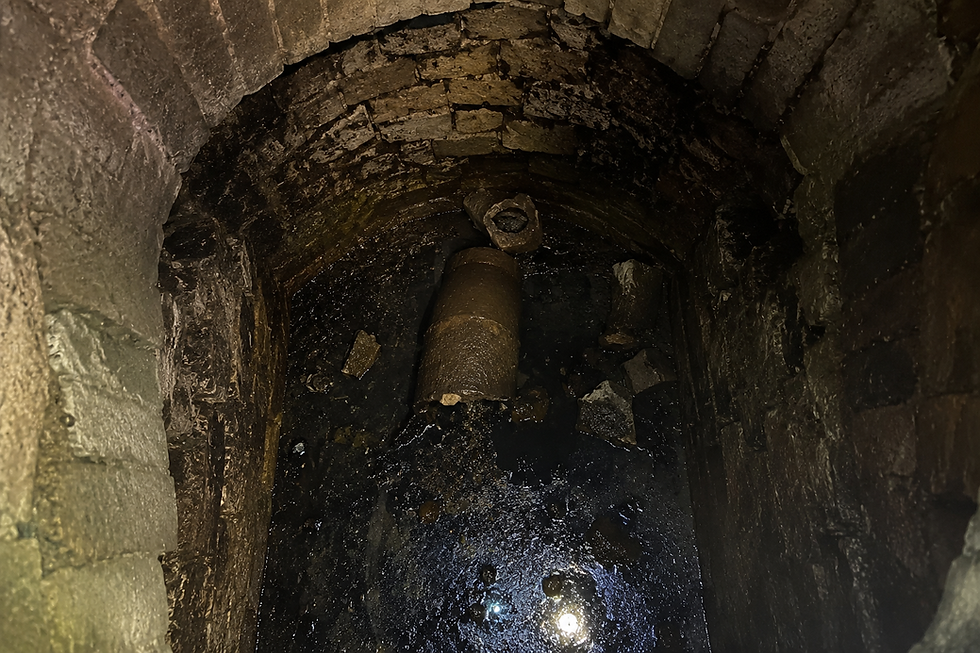
Much of what is known about privies during the 17th and 18th century comes from witness statements describing what had been discovered among the human excrement, such as the corpses of unwanted infants.
From the early 17th century onwards the larger towns and cities began to employ scavengers, as they became known, to remove waste from the streets. Much of this effluent came from overflowing privies and dunghills, or from chamber pots emptied into the streets from upstairs windows.
Enter the Chronicles- CLICK!

Continue Exploring the Human Cost of History
Some stories challenge the way nations remember themselves.

Others force us to confront the voices history tried to leave outside the room.

Paul Rushworth-Brown is the author of three novels:

The Thomas Rushworth Chronicles
History remembers the great events. The Thomas Rushworth Chronicles remembers the people who lived through them.
Set in Yorkshire between 1590 and 1603, these free serialized chronicles follow ordinary men and women navigating a world shaped by plague, poverty, manor courts, religious tension, crime, punishment, and survival. Here, history is not a distant backdrop but a force that shapes every decision, every relationship, and every life.
At the centre of the story are the Rushworth family and the villagers around them—labourers, servants, tavern keepers, stewards, merchants, soldiers, widows, outcasts, and those living on society's margins. Some seek opportunity. Some seek justice. Others are simply trying to survive.
Each Chronicle reveals another piece of a larger world filled with hidden motives, dangerous loyalties, village secrets, manor politics, and the everyday struggles of ordinary people trapped inside forces far greater than themselves.
Published as an ongoing serial, The Thomas Rushworth Chronicles invites readers to step into the lives history often ignored and experience the human cost of living through the past.
History continues...

Some lives disappear into history. Others refuse to remain buried.
In the shadow of industrial Yorkshire, two brothers leave the moors behind in search of opportunity, survival, and a future larger than the lives they were born into. But the growing streets of Leeds offer no easy promises. Beneath the smoke, ambition, and expanding wealth lies a world shaped by hardship, silence, class division, and the quiet cost of survival.
As old loyalties fracture and hidden tensions rise, the Rushworth brothers are forced to confront a difficult truth: history is not only shaped by kings and power—but by ordinary people trying to endure the forces closing around them.
The Lost Voices is a richly atmospheric historical novel about identity, endurance, family, and the human cost of history.

He came to Australia with hope. The land had other plans.
In 1950s Australia, a young Yorkshireman arrives under the Big Brother Movement scheme believing hard work and opportunity will give him a better life. Instead, he enters a harsh and unfamiliar world shaped by silence, isolation, power, and histories far older than his own.
Far from the promises he was sold, Jimmy is forced to navigate the brutal realities of outback station life, cultural tension, survival, and the uneasy relationship between belonging and identity. But as he forms unexpected connections with Aboriginal stockmen and begins confronting the truths beneath Australia’s surface, the land itself starts changing him in ways he never expected.
Outback Odyssey is a powerful historical novel about ordinary people caught inside forces far greater than themselves — and the human cost of surviving them.
Find out more: https://www.paulrushworthbrown.com/books

Yorkshire, 1590.On the windswept moors, survival often depends on silence, suspicion, and knowing who to trust before darkness falls.
When rumours begin spreading through the villages and hidden tensions rise beneath the surface of ordinary life, young Thomas Rushworth is drawn into a dangerous world of deception, violence, secret loyalties, and mysteries that refuse to stay buried. Beyond the manor walls and muddy roads lies a brutal existence where peasants struggle to survive against hunger, fear, class division, and the constant threat of ruin.
But in Yorkshire, danger rarely announces itself openly.
Skulduggery is a gritty and atmospheric historical mystery that pulls no punches in its portrayal of life on the Yorkshire moors. Rich in historical realism, suspense, hidden motives, and emotional tension, it immerses readers in a world where every choice carries consequences — and ordinary people are often trapped inside forces far greater than themselves.
Perfect for readers who love historical suspense, medieval intrigue, atmospheric mysteries, and emotionally immersive fiction.
“I intended to read it over the next week but once I started I could NOT put it down.”

England, 1642.Civil war is coming — and ordinary families will pay the price.
As violence spreads across the Yorkshire countryside and neighbour turns against neighbour, the Rushworth family find themselves trapped inside a conflict far greater than they ever imagined. What begins as a struggle for survival soon becomes a dangerous journey through fear, divided loyalties, betrayal, and the brutal realities of a nation tearing itself apart.
Across frozen landscapes, war-torn villages, and uncertain roads, the family must navigate hardship, loss, hidden dangers, and the fragile hope that love and loyalty can survive even in the darkest of times.
But history rarely spares ordinary people.
Red Winter Journey is a richly atmospheric historical adventure filled with suspense, emotional depth, humour, intrigue, romance, and the harsh realities of the English Civil War. Twisting and turning until the very end, it is a story about endurance, family, and the human cost of history itself.
Perfect for readers who love immersive historical fiction, gripping adventure, emotional storytelling, and unforgettable journeys through the past.
“A fictional, historical novel about a loving peasant family caught up in a shocking Civil War. Humour, romance, adventure and excitement are here to enjoy. A great story.”

England, after the execution of King Charles I. The monarchy is gone. Fear rules the roads. And survival belongs to those willing to risk everything.
As Oliver Cromwell’s new Republic tightens its grip across England, the Rushworth family struggle to escape poverty in a country shaped by suspicion, violence, and uncertainty. Along dangerous highways and through shadowed taverns, they encounter highwaymen, thief-takers, pirates, smugglers, and the brutal underworld hidden beneath England’s fragile new order.
But every opportunity comes at a cost.
Drawn into a world of deception, shifting loyalties, hidden motives, and deadly secrets, the family soon discover that survival in this new England demands more than courage alone. Because in a land where power changes hands overnight, trust can become the most dangerous gamble of all.
Dream of Courage is a gripping historical thriller filled with mystery, suspense, danger, adventure, and emotional intensity. Rich in atmosphere and historical realism, it continues the sweeping story of ordinary people trying to endure the forces of history closing around them.
Perfect for readers who love historical suspense, dark adventure, gritty realism, and immersive journeys through England’s turbulent past.


Comments